
UK Adventure Triathlon Events Worth Racing
Not every start line needs a lake swim, carbon bike and a transition area full of nervous silence. The best UK adventure triathlon events feel different from the moment you arrive. There is still challenge, still effort, still that satisfying mix of training and race-day nerves – but the atmosphere is broader, friendlier and a lot more memorable.
That is exactly why more people are looking beyond the standard swim-bike-run formula. Adventure formats bring in trail terrain, wild locations and disciplines that feel closer to a weekend outdoors than a polished circuit race. For plenty of athletes, that is not a compromise. It is the point.
What makes UK adventure triathlon events different?
At their best, UK adventure triathlon events keep the structure that makes multisport racing so addictive while stripping out some of the stiffness that can put people off. You still move through three disciplines. You still manage pacing, kit and transitions. But the character of the event changes when the route heads off-road, the setting gets bigger and the experience becomes as important as the result.
That difference matters. A road triathlon can feel highly controlled and intensely performance-led. An adventure triathlon usually feels more open. There is room for serious racers, first-timers, outdoor enthusiasts and groups of mates doing something hard for the fun of it. The finish line still means something, but the journey to it tends to feel less boxed in.
The disciplines can vary too. Some events lean into open water and mountain biking. Others swap traditional elements for more distinctive formats. That is where adventure racing becomes genuinely exciting – not as a novelty, but as a better fit for people who want challenge without the same old template.
Why more athletes are choosing adventure over conventional triathlon
A lot of people love triathlon but do not love everything around it. Pool training can feel repetitive. Race environments can sometimes seem overly technical. The cost of specialist kit soon adds up. For newer participants, that can make the sport look harder to access than it really needs to be.
Adventure triathlon shifts the emphasis. It still rewards preparation, but it often feels more welcoming because the culture is broader. Trail runners, cyclists, paddleboarders and general outdoor fitness fans can all find a place in it. You do not need to look like a textbook triathlete to belong on the start line.
There is also a stronger lifestyle pull. People are not only signing up for split times. They are signing up for scenery, atmosphere, camping, community and the sense that the event is part challenge, part great day out. That combination is powerful because it gives participants more than one reason to say yes.
For corporate groups and friendship groups, that matters even more. A conventional race can feel daunting if only one or two people are already into triathlon. An adventure event is often easier to sell in because it sounds fun straight away. Hard, yes. But also social, different and worth talking about afterwards.
The rise of alternative formats
One of the biggest shifts in the market is that participants are no longer only comparing distances. They are comparing experiences. Sprint or standard used to be the obvious choice. Now people are asking a different question: what kind of day do I actually want?
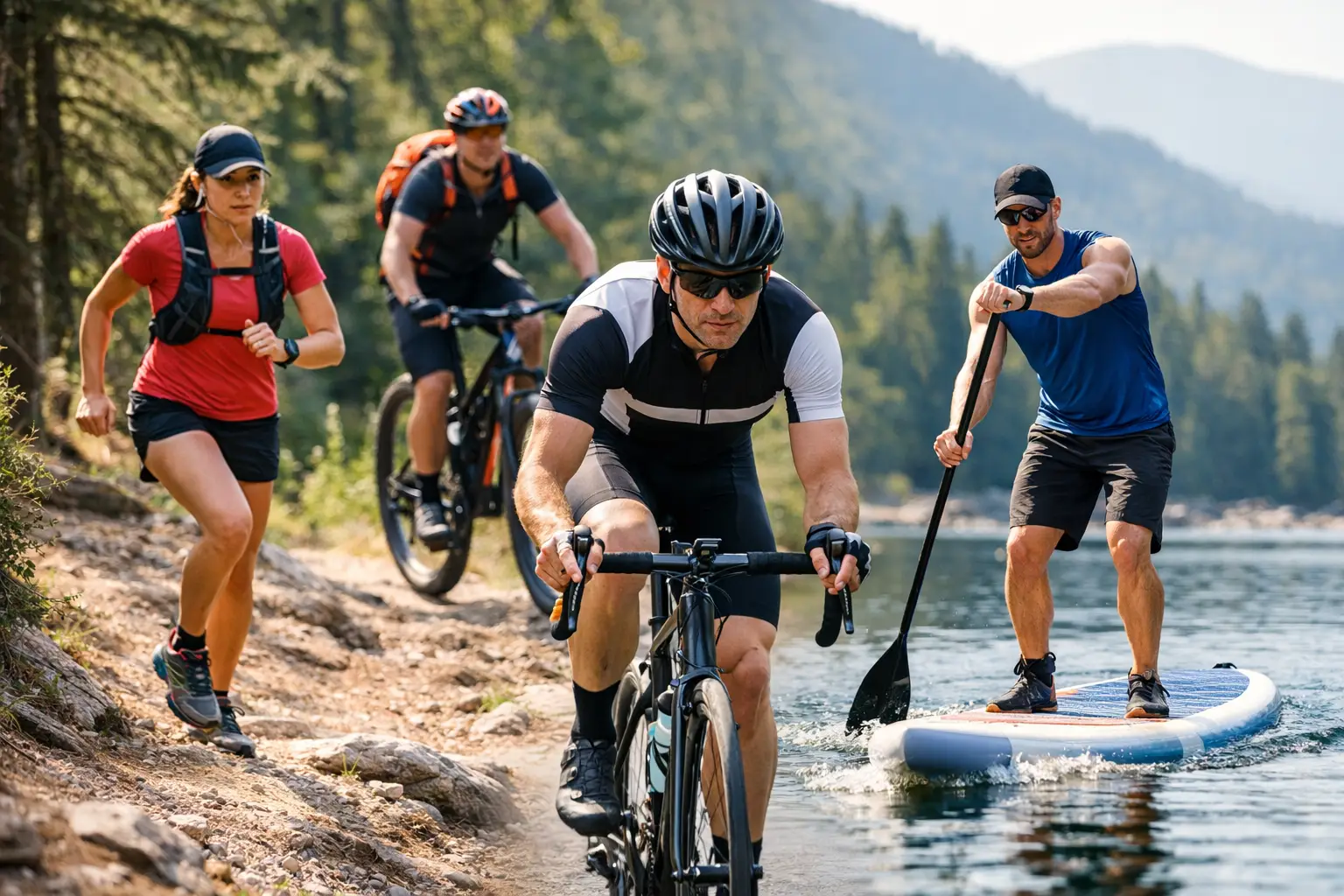
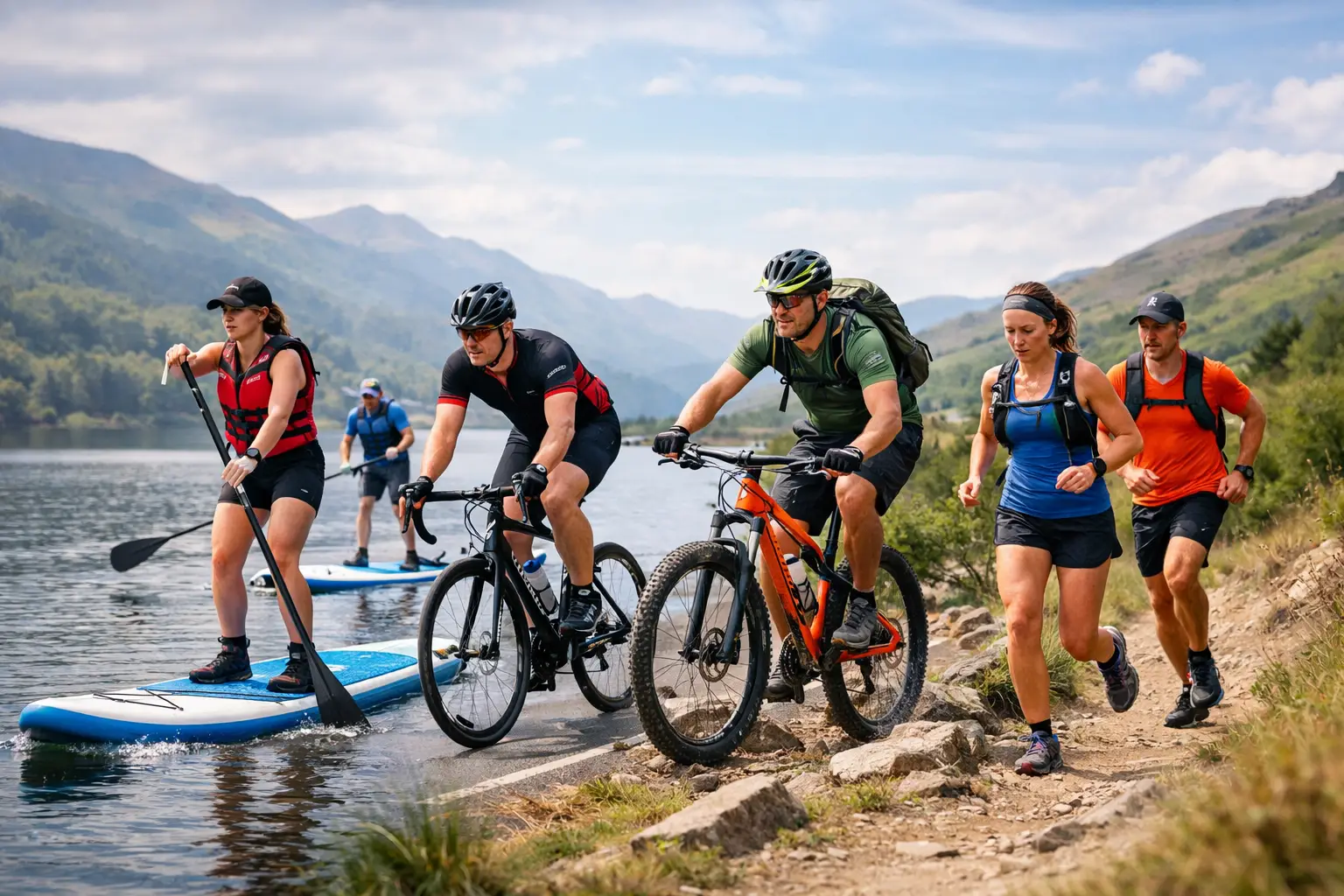
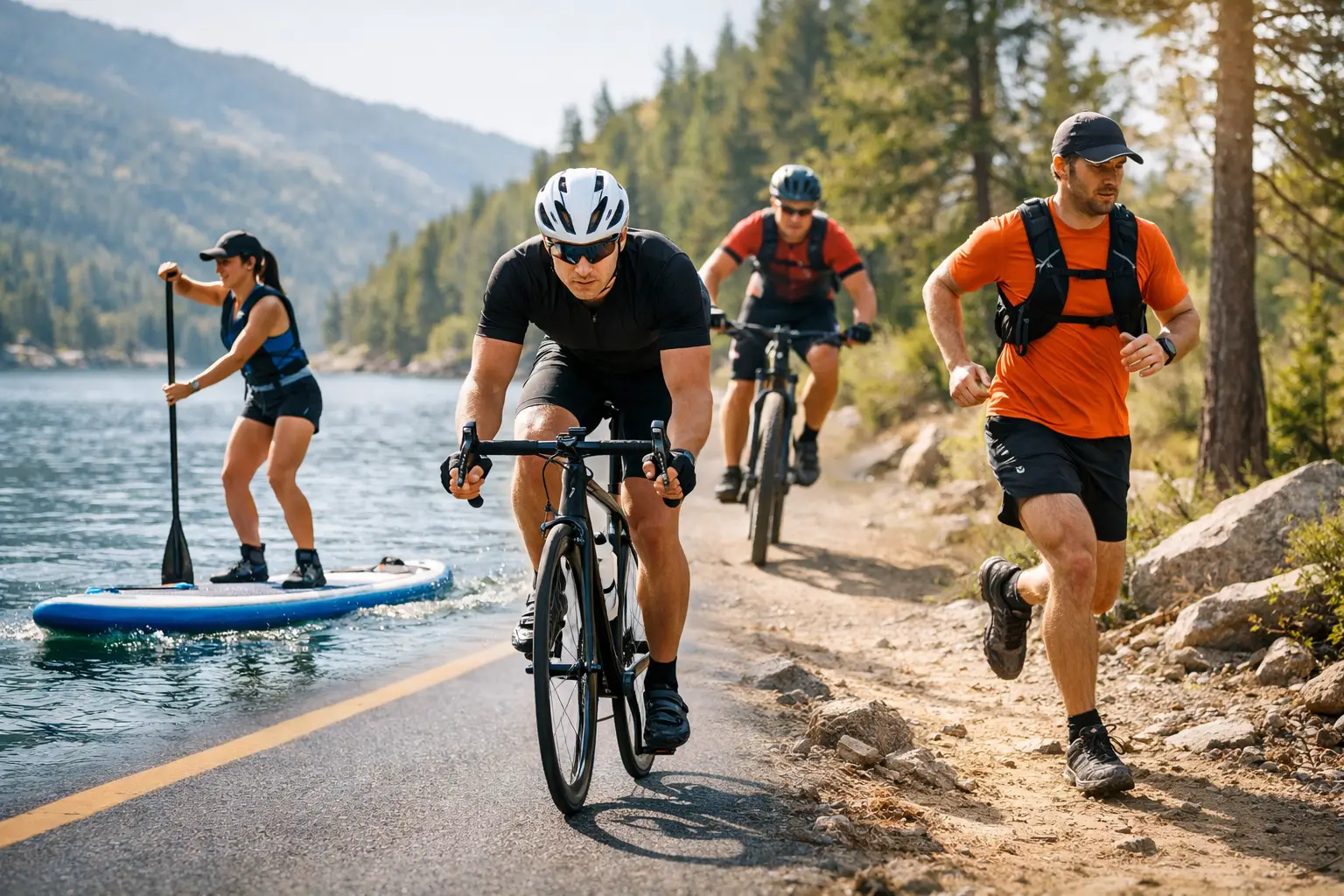
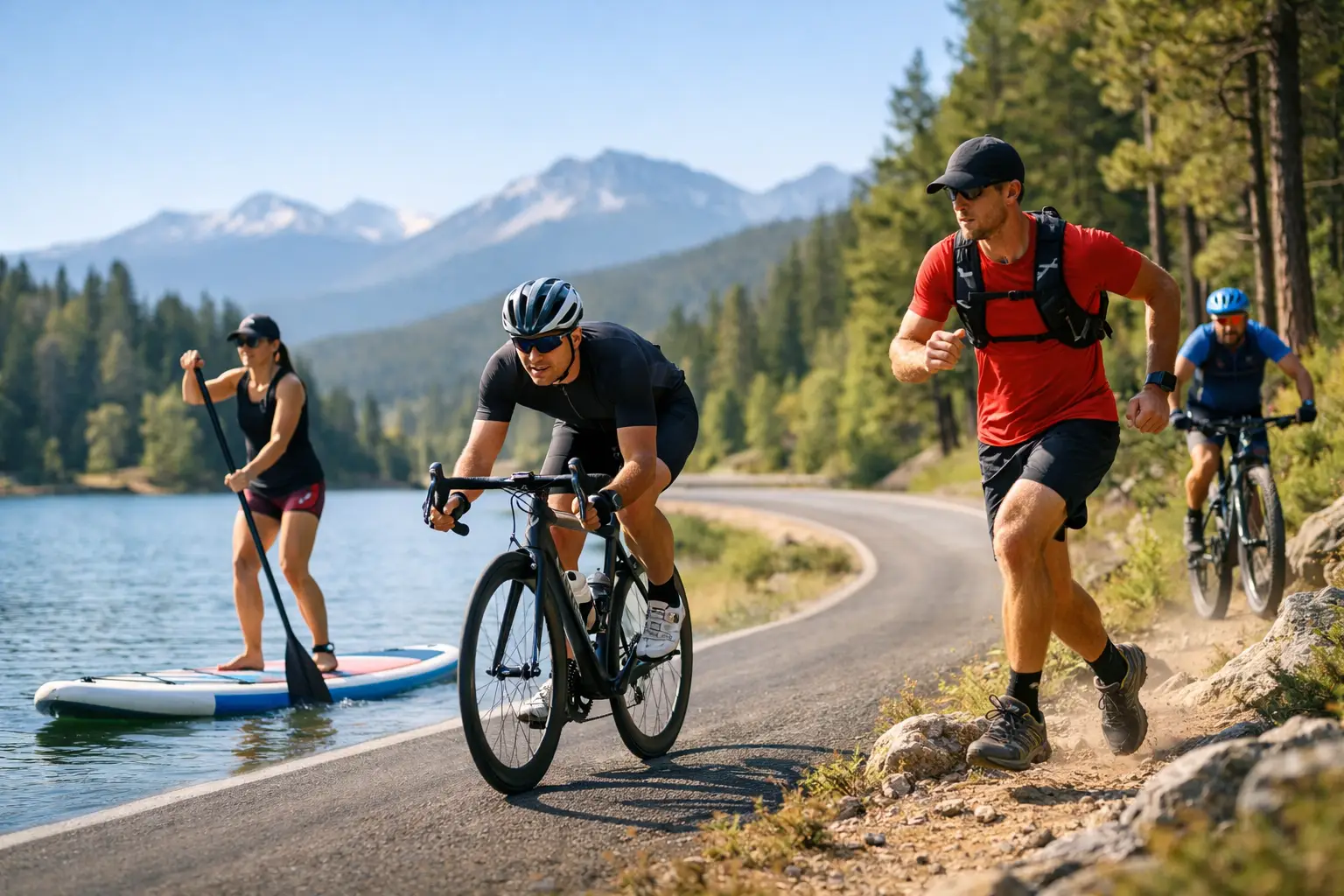
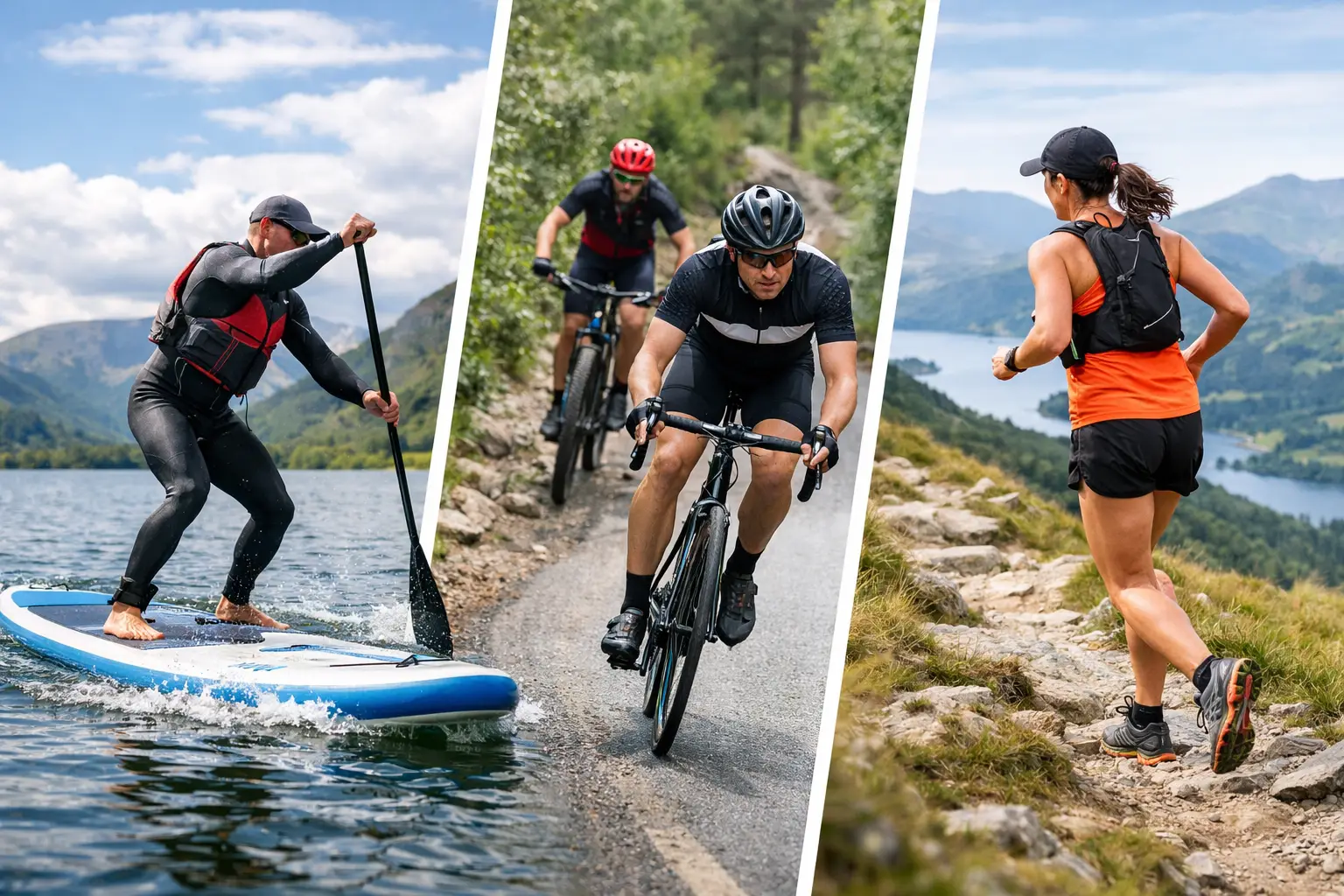
That has created space for alternative event formats built around outdoor culture rather than old expectations. Stand up paddleboarding, trail running and mixed-terrain cycling make immediate sense to anyone who prefers beaches, forests and hills to lanes, barriers and traffic-free dual carriageways. These formats keep the multisport challenge intact while making the event feel less conventional and more alive.
This is where a concept like SUPBIKERUN stands out. Replacing the swim with paddleboarding is not just a gimmick. It changes the tone of the whole event. It widens the door for people who love being on the water but never quite connected with swim training, and it creates a race experience that feels adventurous from the first leg rather than familiar.
What to look for in a good adventure event
If you are choosing between UK adventure triathlon events, the route is only part of the story. A brilliant concept still needs proper delivery. The best events balance freedom and professionalism. They feel relaxed on the surface because the organisation underneath is solid.
Good signage, clear wave information, supportive marshals, sensible cut-offs and well-managed transitions make a huge difference, especially in mixed-terrain races. Participants want the buzz of adventure, not avoidable confusion. If an event promises wild fun but forgets practical detail, the experience suffers quickly.
The event village matters too. For this audience, the race is rarely just the race. Parking, camping, spectator access, coffee, toilets, bag drop and a decent finish-line atmosphere all shape how the day is remembered. People are more likely to return when the whole experience works, not only the course.
It is also worth looking at how inclusive an event feels. Some races talk a good game about being open to all, then pitch everything towards hardened competitors. Others genuinely welcome mixed abilities and still provide a proper challenge. That balance is harder to achieve than it sounds, but when organisers get it right, the community grows fast.
Is adventure triathlon only for experienced athletes?
Not at all, but the honest answer is that it depends on the event and on your background. If you are fit, active and comfortable outdoors, an adventure triathlon can actually feel more approachable than a traditional one. You may already trail run at weekends, ride regularly or paddle for fun. In that case, you are not starting from scratch. You are joining the pieces together.
If you are completely new to endurance sport, you still need to respect the challenge. Trail terrain can be slower and more demanding than road surfaces. Paddleboarding requires balance and calm under pressure. Mixed-discipline events ask your body to adapt quickly. None of that should put you off, but it should shape how you prepare.
The encouraging part is that adventure events often attract a more varied field. That means you are less likely to feel like the odd one out if your goal is to finish strongly rather than fight for a podium place. The mood tends to be competitive in the right way – people push hard, but there is usually more camaraderie and less intimidation.
Training for UK adventure triathlon events
Training well means preparing for the actual event, not a generic triathlon plan lifted from somewhere else. If your race includes paddleboarding, cycling and trail running, your sessions should reflect those demands. Board handling, remounts, leg strength for uneven ground and time spent moving between disciplines matter just as much as aerobic fitness.
Specificity counts. Trail running asks more from your ankles, calves and concentration than flat road miles. Off-road or mixed-surface cycling can change your pacing completely. Paddleboarding brings in core stability, upper-body endurance and technique. If one discipline is clearly weaker, it is usually smarter to build confidence there first rather than obsess over your strongest leg.
You do not need a perfect training block to enjoy the event. You do need consistency. Two or three months of sensible, regular work will take most active people much further than a last-minute burst of enthusiasm. Practising transitions helps as well. The smoother you are between disciplines, the more relaxed race day feels.
The real appeal – challenge with atmosphere
What keeps people coming back to UK adventure triathlon events is not only the format. It is the feeling. You get the satisfaction of a proper endurance test, but with a setting and crowd that make the day feel bigger than your finishing time.
There is a trade-off, of course. If you want ultra-precise PB chasing on a predictable course, a conventional road triathlon may suit you better. Adventure races can be less uniform by nature. Terrain changes, weather matters more and pacing can be harder to judge. For many athletes, though, that unpredictability is exactly what makes the achievement feel more real.
You remember the muddy climb, the wind on the board, the support at transition and the finish-line buzz far longer than you remember a neat split on a watch. That is why these events travel well by word of mouth. People do not just say they raced. They tell the story.
If you are craving a race that feels less boxed-in and more alive, adventure triathlon is a very good place to look. Pick an event that matches your level, train for the terrain, and give yourself something worth talking about long after race day.